Saturday, 30 December 2023

Benfica 2004 - Takis Fyssas


Takis Fyssas não foi o primeiro grego a representar o Benfica (hove Machairidis antes), mas foi o primeiro de uma "fase grega" que começou em 2003 com a sua chegada, e continuou com jogadores como Karagounis, Katsouranis, Samaris ou Mitroglou.
Fyssas nasceu a 12 de Junho 1973 em Atenas. Percorreu a academia do Panionios desde criança e tornou-se profissional pelo mesmo clube na época de 90/91. Forte a defender, também tinha boa qualidade ao apoiar o ataque pela esquerda.
Em 1999 mudou-se para o Panathinaikos onde evoluiu e tornou-se internacional grego. 
No mercado de inverno 2003/04 assinou pelo Benfica a custo zero. A defesa esquerda necessitava mais qualidade e depois de sua chegada a Lisboa, tornou-se titular indiscutível. O seu ponto alto nessa sua primeira época de águia ao peito, certamente foi a Final da Taça, onde marcou um lindo golo (seu único golo pelo Benfica) para empatar o jogo contra o FC Porto. No prolongamento Simão apontou o golo da vitória, que terminou a séca após 8 épocas sem títulos.
Seguiu-se mais uma época, depois de se ter coroado aínda Campeão Europeu com a Seleção grega no Estádio da Luz, que deu o tanto desejado campeonato ao Benfica, que escapava desde 1994. 
Em 2005 deixou o Benfica para rumar á Escócia e representar o Hearts of Midlothian. Permaneceu la duas épocas antes de voltar ao Panathinaikos por mais uma época. Em 2008 terminou a carreira para excercer várias funções dentro da Federação grega de futebol. 
Esta camisola oriunda do jogo para a Taça UEFA contra o Beveren em 2004, onde não saiu do banco.

Takis Fyssas was not the first greek player to represent Benfica (Machairidis played for us before), but he was the one to start a greek period that started in the mid 2000s. He arrived at Benfica in 2003 and paved the road for some more, like Karagounis, Katsouranis, Samaris and Mitroglou.
He was born on 12th of June 1973 in Athens. After starting at Panionios academy, he signed a professional contract in the 90/91 season for the same team. He was a left back with quality to support the team when attacking. 
In 1999 he moved to Panathinaikos and grew as a player to reach international status. 
His move to Benfica during the winter transfer window 2003/04 resulted out of the need to strengthen the left side of the defence. After his debut he became first choice for coach Camacho. He had his probably best moment in the last match of the season, the Cup final. He scored a wonderful goal (his only one for Benfica) to make it 1:1 after 90 minutes, and help to win it in extra time. It was the first silverware in 8 years. 
The following season he started as European Champion, that he won with the greek national team on same soil. It ended with a nother title, that was the championship, that Benfica missed since 1994. 
After that he left Benfica to sign for Hearts of Midlothian, where he played two seasons, before returning to Greece in 2007. Takis Fyssas hang up his boots in 2008 to start working for the greek football federation. Nowadays he is the sporting director of the national team.
The shirt is out of the UEFA Cup match vs Beveren in 2004, where he was unused substitute. 

Jogo/ match: 02.12.2004  Beveren vs Benfica  0:3

Fornecedor/ outfitter: Adidas


Wednesday, 8 November 2023

Portugal 1973 - Conhé


A camisola apresentada infelizmente chegou até mim sem qualquer informação sobre o jogador ou jogo, mas ao aprofundar a pesquisa e com alguma ajuda externa penso que se trata de uma camisola utilizada por Conhé. 
José António Mendonca Ferreira nasceu a 4 de Julho 1945 no Barreiro, onde também iniciou a sua carreira como futebolitsa. Foi na CUF, o mítico clube dos anos 60 e 70, onde foi formado, mas emprestado ao Luso do Barreiro para ganhar ritmo. Após quatro épocas lá, foi transferido para o União Tomar, antes de voltar para a CUF em 1970 e impor-se como titular da equipa. Foi isso durante seis épocas, até ao fim da "lei de opção" e a saída de Vitor Damas do Sporting em 1976 lhe abrir a vaga para entrar num dos grandes clubes do país. Com a qualidade que tinha não demorou muito a convencer, mas por opcões do técnico transferiu-se para o SC Braga ja na época seguinte. Ja em 1980 aínda jogou mais duas épocas no Portimonense, antes se retirar como jogador e iniciar uma carreira como treinador, que ocupou durante quase 30 anos.
A camisola aínda é dos tempos em que foram produzidas de material pesado, umas autenticas malhas. Este tipo de camisola foi utilizado entre os meados de 60 e 70. Pelo que pude verificar deve-se tratar de uma das camisolas que Conhá utilizou durante uma das suas duas internacionalizações em 1973 como Junior.
Se alguem souber mais sobre esta camisola por favor entrem em contaco comigo.
 
Initially the shirt shown above came with no information about player or match. So i started digging a bit, and with some help i think i found out whom it belonged to. It is a heavy woolen shirt worn by a goalkeeper and this type of shirt was used mid 60s to mid 70s. From pictures i have found i would narrow it down to the early 70s. 
The player is José António Mendonca Ferreira, better known as Conhé. The name comes from the french word cogner, that means "to beat". It is being said that Conhé was a roughneck as a kid.
He was born on 4th of July, 1945 in Barreiro, home of the mythic club CUF in the 60s and 70s. Logically he started his career there but was loaned to its affiliate club "Luso do Barreiro" to gain experience. After four years there he moved to Uniao Tomar before returning to CUF in 1970. Here he became first starter for 6 years and one of the best goalies in Portugal, not playing at one of the big 3. 
After the revolution of 1974 many things changed, and so did footballers get more rights (many of the professionals in reality were semi-pros, that trained after work), and a lucky coincidence allowed him to sign for Sporting in 1976. After only one season he moved on to Braga, becoming first choice and in 1980 e made his final move to play for Portimonense for two more seasons. After that he started a career as coach, especially for goalies, that he carried out for almost 30 years.
The shirt shown is believed to be worn by him in one of his two matches that he played on Junior level in 1973.
Any ongoing information would be appreciated. Contact me via the contact box at the right.

Jogo/ match: - 

Outfitter: -

Wednesday, 18 October 2023

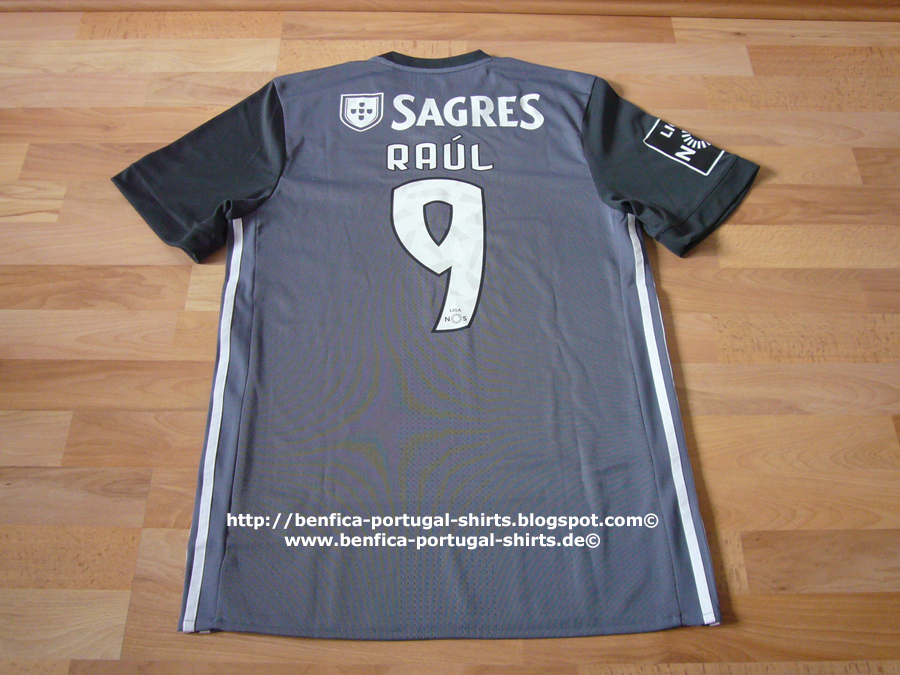
Benfica 2017 - Raúl Jimenez


Quando pensei qual podia ser o meu proximo post, vi que aínda não tinha mostrado aqui nenhuma camisola da época 2017/18. Fica então aqui a primeira:
Raúl Alonso Jimenez Rodriguez, nasceu a 5 de Maio 1991, data que é feriado no México pela vitória do exército mexicano sobre o francês em 1862 na batalha de Puebla. Esse espírito lutador, que levou 4000 soldados mexicanos a vencer o dobro de francêses, também tivemos sorte de disfrutar quando vimos Raúl a defender as cores do Benfica. Mais sobre isso, de aqui a bocado.
Raúl passou pela academía do Club América e alinhou na equipa principal pela primeira vez em 2011. Após da participação nos Jogos Olimpicos 2012, onde venceu a medalha de ouro, apareceu regularmente no onze inícial. Fez parte da equipa que venceu o Campeonato em 2013, onde foi segundo melhor mercador. Em 2014 foi transferido para o Atletico Madrid, mas não conseguiu impor-se e estava para ser emprestado ao West-Ham na época seguinte. 
O Benfica antecipou-se e contratou-o no verão de 2015 por uma verba a rondar os 10m€. Ele logo se tournou jogador muito acarinhado pelos adeptos. Isso nem tanto pelos jogos que disputou, porque na maioria saía do banco, devido á importância de Jonas. Mas sim pelos golos que marcava com poucos minutos em campo. Golos que muitas vezes deram a vitória ao Benfica. Assim tornou-se um pouco a arma secréta e os adeptos adoravam-no. Para mais ele sempre mostrou o espírito lutador mencionado acima e um amor especial pelo Benfica.
Como referido, os golos dele foram importantes, ja na primeira época, e ajudaram a conquistar o campeonato na sua época de estreia.
A época seguinte foi parecida. Geralmente substituto, mas muitas vezes sendo crucial para o resultado do jogo. No fim da época arrecadou três títulos (Campeonato, Taça e Supertaça), mas o mais importante foi o inédito Tetra. 
Em 2017/18 foi o ano com menos golos dele (8), e continuou a ser segunda ou terceira opção. Par mais perdeu-se o Campeonato a três jornadas da final com uma derrota no Clássico. 
Na época seguinte foi emprestado ao Wolverhampton com opção de compra perto dos 40m, que foi excercida perto do fim da respectiva época. La voltou aos golos e a ser primeira escolha durante um bom tempo. Permaneceu lá durante quatro épocas, antes de ser transferido para o Fulham no verão deste ano.
Obrigado Raúl pelas alegrias que nos déste.


When i was thinking about what to post next, i noticed, that i haven`t posted a shirt out of the 2017/18 season, so far. So here it is:
Raúl Alonso Jimenez Rodriguéz was born on 5th of May 1991. Coíncidence or not, it is the date of an important holiday in Mexico. "Cinco de Mayo" is widely known for the victory of Mexico over the French army in the battle of Puebla in 1862. The fighting spirit of the Mexican defenders who saw themselves outnumbered by the factor of 2, helped them overcome this prejudice. Why am i telling you this? Well, Raúls main character was exactly this fighting spirit, but more later.
He started his career in the youth system of Club Atlético before being called to the first team in 2011. after his participation in the successful campaign of Mexico in the 2012 Olympics, where they returned with the gold medal, he gained his spot in the starting eleven. In 2013 he helped the team win the Championship and was second best scorer.
2014 meant a change in life because he was signed by Atletico Madrid. After a season that could have been better, he was about to be loaned to West Ham but somehow Benfica managed to convince him to come to Portugal, and so he was signed in summer of 2015 for round about €10m. 
It dind`t take long to convince the fans (and this is about fighting spirit). He wasn`t a regular starter, as Jonas was the forst choice striker. But he became something like a secret weapon of the coach. Many of his goals happened near the end and often with only a few minutes on the pitch. Quite a few of these goals were crucial to win or to establish a lead. In the end Benfica managed to win its third back to back Championship. 
The following season basically same situation and important contributions for the success of the team. In the end he won three titles (Championship, Cup and Supercup), and the never before achieved "Tetra" of course was the most memorable.
The third season with us was probably the less productive with only 8 goals and losing the lead of table just three marches from the end of season in a "Classico". 
After this year and with less space in the team, he was loand to Wolverhampton with a buyout clause of €38m. It was excercised near the end of the season and he spent a total of four years at the Wolves. In Summer of 2023 he moved to Fulham.

Jogo/ Match: 01.10.2017  Maritimo vs Benfica 1:1

Fornecedor/ outfitter: Adidas

Friday, 28 July 2023

Portugal 1969 - José Carlos


José Carlos da Silva José foi um dos grandes nomes do Sporting durante a década de 60. Foi capitão de equipa e disputou 348 jogos como leonino. 
Ele nasceu a 22 de Setembro 1941 em Vila Franca de Xira e iniciou a sua carreira na CUF. Foi também pela CUF que fez os seus primeiros jogos como profissional. Durante duas épocas, entre 1960 e 1962 ele jogou mais de 50 partidas pelo clube do Barreiro. Em 1962 foi contratado pelo Sporting e mais tarde pôde-se dizer que foi uma decisão para a vida. Durante 12 épocas conquistou três campeonatos e o mesmo número de Taças, mas também foi peça fundamental na conquista da Taça das Taças em 1964.
Ele era um defesa central que possuia a polivalência de poder jogar a qualquer posição no sector defensivo. Isso, e um posicionamento táctico acima da média certamente foram a razão de uma carreira bem sucedida. 
Em 1966 fez parte dos magriços e voltou da Inglaterra com a medalha de bronze. Alem disso representou Portugal em 36 ocasiões, sendo esta camisola uma que vestiu ao longo da sua carreira. O jogo não é conhecido e assim pode ter sido utilizada entre 1967 e 1969.

José Carlos da Silva José is one of the biggest names at Sporting Clube de Portugal and played 12 seasons for the club. He was team captain and played 348 matches for the lions.
He was born not far from Lisbon, on 22 of September 1941 in Vila Franca de Xira. He spent his youth mostly at CUF in Barreiro, being called to represent the team in the first league from 1960 on. He stayed two seasons and left after more than 50 matches to sign for Sporting in 1962. A decision for life, as one could see in his CV, because he only left SCP in 1974, to shortly after start his managing career.
During his time in Lisbon he won three Championships and same mumber of Cups. But the biggest moment probably was the conquest of the Cup Winners Cup in 1964. 
He was a very versatile defender. Usually being a central defender, he also was able to play either left-/righ-back. Paired with a superb tactical positioning and fighting spirit you have the ingredients for becoming one of the best.
On international level he represented Portugal on 36 ocasions, and was one of the players that won bronze during the 1966 WC. This shirt was worn by him during his career, the match being unknown. As this type of model was used between 1967 and 1969, it is only possible to narrow the range of age. 

Jogo/ match: -

Fornecedor/ outfitter: -

Thursday, 29 June 2023

Benfica 1999 - Ronaldo Guiaro


Ronaldo Guiaro nasceu a 18 de Fevreiro 1974 em Piracicaba no Brasil e iniciu a sua carreira profissional no Guarani em 1993/94. Pouco depois transferiu-se para o Atletico Mineiro, onde permaneceu até 1996. 
A sua posição foi a de defesa central. Possuiu um bom jogo aereo e talento suficiente, que foi mostrando nos Jogos Olimpicos em Atlanta, para o novo treinador do Benfica, Paulo Autuori, dispositar a confiança nele e pedir a sua contratação.
Assim chegou no verão de 1996 ao Benfica, que tinha perdido alguns jogadores na defesa, tal como Ricardo Gomes e Kenedy. Sendo inícialmente contratado para opção aos habituais titulares Helder e Bermudez, demorou algum tempo para se impor, também porque a época correu além do que se esperava. Houve três treinadores e com muitos defesas contratados apenas na época seguinte é que se tornou titular. 
Sob o comado de Souness tornou se num dos jogadores mais utilizados e nunca mais perdeu o seu estatuto. Infelizmente o tempo enquanto representou o Benfica entrou na história como o "Vietname" ou periodo escuro, onde factores externos influenciaram muito os resultados dentro das quatro linhas. Assim saiu da Luz em 2001 sem titulo. Algo que, durante 5 anos no Benfica, acho que não aconteceu a muitos. 
Foi para o Besiktas na Turquia onde finalmente não apenas conseguiu ser feliz, mas também ganhar o campeonato em 2003. Seguiram se estações no Santos e no Aris na Grécia, muitos jogos como capitão, antes de pendurar a botas em 2011. 
Ele fez parte da Seleção do Brasil que ganhou a medalha de bronze nos Jogos Olimpicos em 1996.
A camisola apresentada foi utilizada por ele durante a época 1999/00. 

Ronaldo Guiaro was born on 18th of February in Pracicaba/Brazil. 
He started his professional career in 1994 at Guarani but son was signed by Atletico Mineiro, where he made two seasons. 
His position was centre back and his good aerial play and talent, that he showed during the 1996 Olympics, made the new coach of Benfica, Paulo Autuori, want to have him in the team.
So he arrived in Lisbon in Summer 1996, to backup the usual first choices Helder and Bermudez, as some defensive players had left the club. It took a while to settle and show his capacitiy, also because the season went far from expected. The season had three different headcoaches and so it was just in the following season that he gained the spot as a starter. Graeme Souness believed in his abilities and so he was one of the most used players, not only for Sounes, but for all managers to come. And there were a few, as this period went into history of Benfica as "Vietnam" or "dark era". Many external factors shattered the club and had influence on the performance of the team. Never before nor later Benfica was without silverware for so long. Between 1996 and 2004 not a single cup arrived at the museum. 
And so he left after 5 seasons in 2001 without silverware, and i believe that there are not many players of Benfica to whom this applies. 
He was signed by Besiktas where he became first choice and finally won a title, the Turkish Championship in 2003. In 2005 he signed for Santos and later came back to Europe, where played for Aris until he hang up his boots in 2011. 
Today he is coach of the club of his hometown. 
This famous "silver-shirt" was worn during two seasons, and this one by Ronaldo during the 1999/00 season in a domestic match.

Jogo/ match: -

Fornecedor/ outfitter: Adidas


Monday, 1 May 2023

Portugal 2005 - Fernando Meira


Recentemente mostrei aqui uma camisola de Fernando Meira, e aproveito para mostrar outra dele, que é diferente das camisolas habituais desse ano. 
Trata-se de um modelo único que apenas foi utilizado num jogo só. A camisola apresentada foi produzida para levar á atenção de todos o racismo dentro e fora do campo de futebol. Razão para isso foram vários incidentes que tinham acontecido em 2004, entre eles o afirmação de Luis Aragones (Selecionador da Espanha) perante seu jogador Antonio Reyes, "Demuestra que eres mejor que ese negro de mierda" em qual se referia a seu colega no Arsenal, Thierry Henry. Mas aínda houve vários outros incidentes na Europa, onde jogadores de cor foram alvos de abusos racistas. 
Thierry Henry então nao era qualquer um jogador. Foi um dos principais jogadores fornecidos pela Nike e juntos chegaram á conclusão que devia ser feito algo para virar as atenções a esse problema.
Assim foi criada a campanha "Stand Up, speak Up" onde as cores dominantes são preto e branco, para simbolizar as cores de péle e que é bem possível viver juntos. Houve estas camisolas, em numeros limitados e so para os jogadores, e para o público foram produzido pulseiras pretas e brancas. As receitas das vendas foram doadas pra projectos anti-racistas.
No dia 9 de Fevreiro 2005, as Seleções mais importantes então fornecidas pela Nike, entraram em campo com esta camisola para promoverem o caso. Foram essas: Portugal, Holanda e Russia.
Mais tarde as camisolas de Portugal foram leiloadas pela FPF.

I recently posted a shirt of Fernando Meira here, and so i take the opportunity to add another one, that is totally different to the shirts of that time. 
This is a one-off shirt, that was created to raise awareness to the increasing problem of racist incidents happening throughout football-stadiums around Europe and worldwide. Catalyst for it was a racist statement by former spanish coach Luis Aragones towards his player Antonio Reyes, where he said "You will show this black shit (Thierry Henry) that you´re better than him". Thierry Henry was teammate of Reyes at Arsenal back in 2004. As one of the most iconic sportsmen, sponsored by Nike at that time, he decided to move forward, and so the "Stand up, speak up" campaign was created.
Coloured black and white, armwrists were sold publically to support a good cause, and special shirts were created for d-day and the leading teams sponsored by Nike. 
On 9th of February 2005 Portugal, Netherlands and Russia played their friendlies in this shirt.
The shirts of Portugal were later auctioned off by the Federation. 

Jogo/ match: 09.02.2005  Rep. of Ireland vs Portugal  1:0

Fornecedor/ outfitter: Nike

Saturday, 8 April 2023

Benfica 2007 - Di Maria


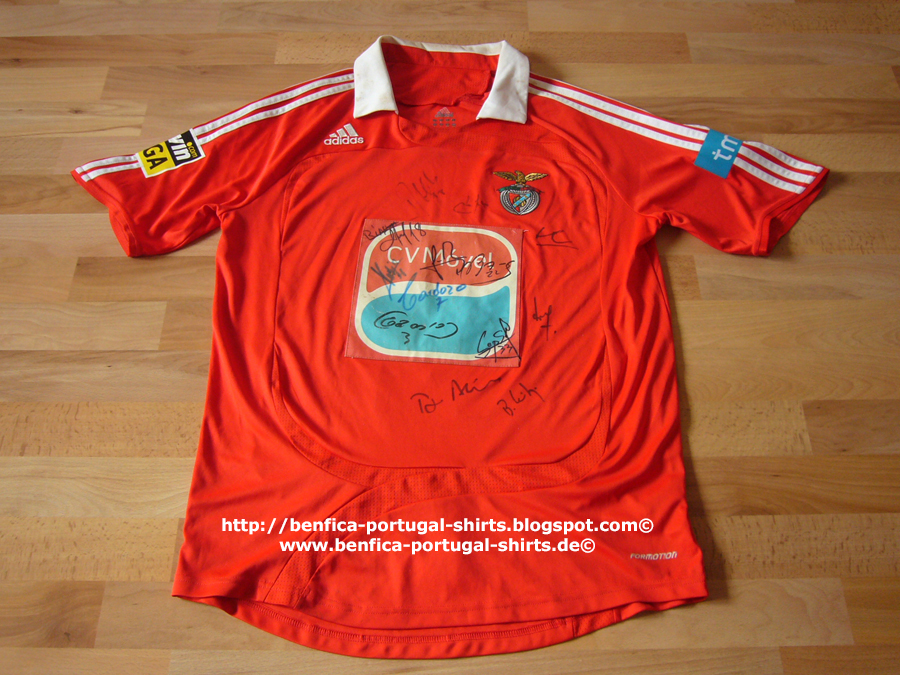
Como ja apresentei o jogador Angel Di Maria aqui em duas ocasiões, deixo de lado essa parte, e refiro-me mais á camisola apresentada, que é um modelo único e que merece alguma explicação.
Para o mundo lusófono o Benfica significa muito e une pessoas em todo mundo. Em total fala-se de mais de 14 milhões de adeptos, e o número de sócios ja ultrapassou os 300mil. 
Muitos dos maiores atletas do desporto e futebol ja representaram o Benfica ao longo dos anos, e contribuíram para a Glória do clube. Nomes como Guilherme Espírito Santo, José Águas, Mario Coluna ou Eusébio foram pessoas que vieram das antigas colónias e preseguiram o sonho deles e levaram o Benfica aos mais altos níveis em todo mundo. 
O clube aprecebeu-se ja cedo da importância que essa massa adepta e associativa tem para o clube e que existe obrigação para devolver algo aos adeptos além fronteiras e no ultramar. Por isso, ocasionalmente e ja ha mais de 70 anos, o clube faz digressões ás antigas colónias. Assim também aconteceu em 2008, quando foi feita uma viágem a Cabo Verde e Angola para disputar dois amigáveis contra Seleções locais. 
A camisola apresentada foi do jogo em Cabo Verde e mostra o patrocínio especial da empresa local de telecomunicações. Para o jogo em Angola foi utilizado um outro patrocinador. Esse modelo aínda me falta e agradecia que entrasse em contacto comigo se tiver uma dessas camisolas.

Probably not many know what Benfica means to people of the "lusofonia", the portuguese speaking community. The club has more than 14m fans worldwide and more than 200k paying members, what makes it the second largest club in the world. If you talk to a portuguese, the probability is very high that he is a fan of the reds, as one out of two in Portugal are.
Why am i telling you this? Benfica wouldn't be what it is if not many, especially portuguese speaking people, haven't contributed to its success over decades. Guilherme Espirito Santo, José Águas, Mario Coluna, Eusébio are names that football enthusiasts know worldwide and that came from the former colonies to follow their dream and become a vivid part of Benficas history.
Benfica is aware of the importance to keep in touch with the communities in these countries. Therfore from time to time the club does tours to play friendlies and give something back to the fans abroad.
In 2008 we did a trip to western Africa, namely Cape Verde and Angola. The shirt is out of the match in Cape Verde and bears a special sponsor on the chest of the local telecommunication company. I am still looking for the shirt of the match in Angola. If anyone could help, would be appreciated. 

Jogo/ match: 17.05.2008  XI Sao Vicente e Sal vs Benfica  0:2

Fornecedor/ outfitter: Adidas